Education-sector teams collaborating to build collective power
Member Update for Education-sector, all members
Nov 14, 2025
AUPE’s negotiating committees are sharing successful tactics
It pays to be a team player when you’re going up against something as big as the Alberta government.
AUPE has more than 12,000 members in its education sector, from 16 post-secondary institutions and two K-12 school boards, most of whom are currently bargaining for new collective agreements.
Dozens of representatives of their negotiating teams gathered in Calgary last week to learn from each other and work together on how best to get improved wages and working conditions for their members.
That collaboration will be a key factor in making progress at the various bargaining tables, particularly because they are all dealing with one big entity – the Government of Alberta’s Provincial Bargaining Co-ordination Office (PBCO).
While each AUPE negotiating team faces different people across their bargaining tables, each of the separate employers must report to the PCBO and follow its mandate.
Acting in isolation would make it harder for each of AUPE’s teams to get the kind of agreement that works for members. Sharing ideas and resources, on the other hand, makes every team stronger.
Shared challenges
Budget pressures: Post-secondary institutions have faced years of provincial funding cuts that have left some students and staff forced to use food banks to survive. Services provided to students have been cut along with funding.
Artificial Intelligence (AI): The rapid growth AI is already affecting workplaces in unexpected ways. That wave of change is only going to get bigger.
Workers need to be prepared to face these changes – and that’s why AUPE has conducted research into AI and its effects. Negotiating teams have used this research and made presentations on AI at bargaining tables to push for protections.
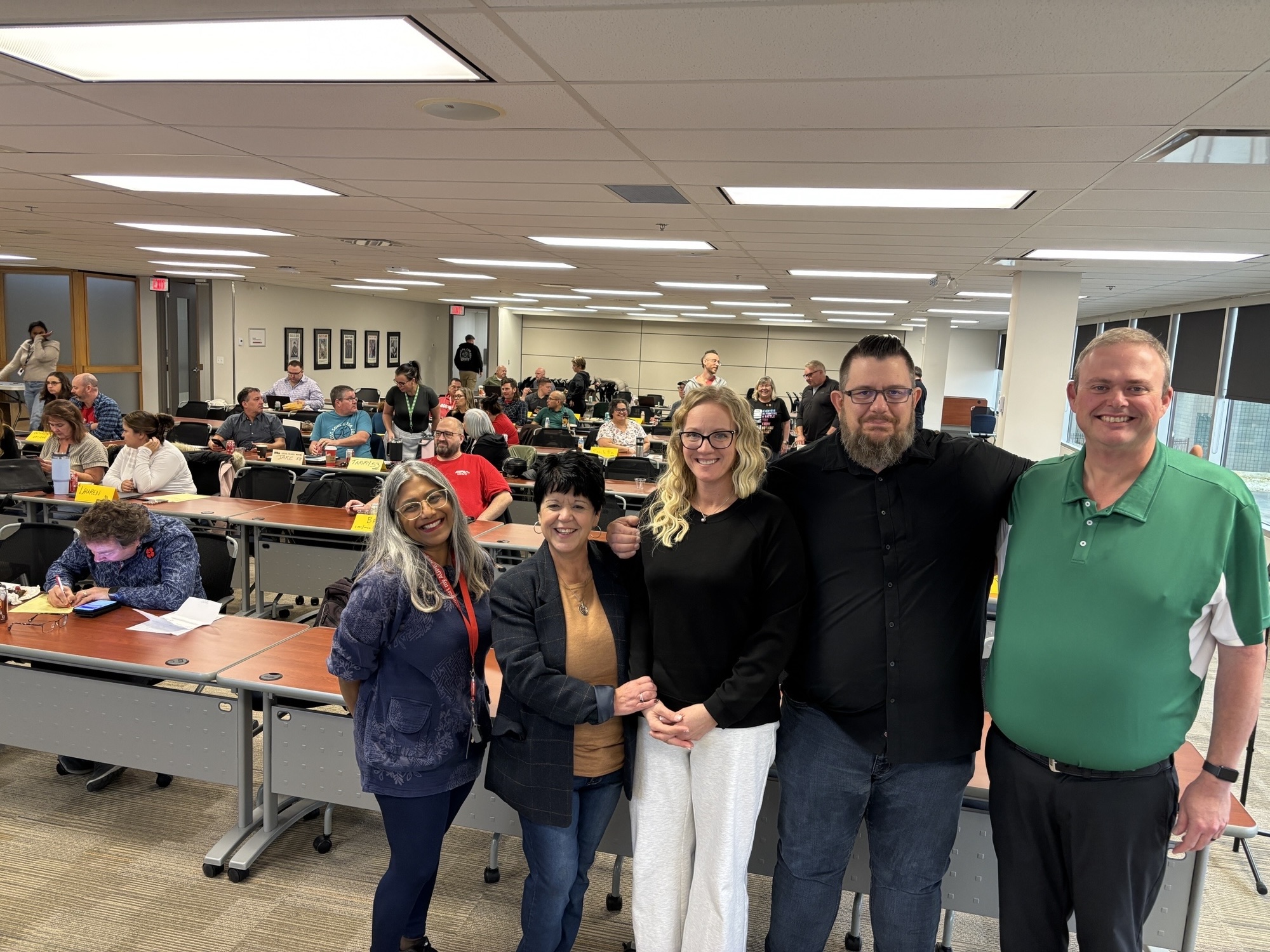
From left, AUPE executives Shamanthi Cooray, Sandra Azocar, Bobby-Joe Borodey, Curtis Jackson and Andrew Wilson gather with education-sector bargaining teams to talk tactics.
Shared resources
Repeat successful tactics: While each of the many bargaining tables may be at different stages, keeping in touch ensures that no single table does a deal that might undermine efforts at other tables.
Pushed by the PBCO, final agreements may end up with similar wage increases, but beyond that, each bargaining unit can push for other contract improvements to suit their individual needs.
Negotiating tactics that work at one school or post-secondary institute are being shared with others in the sector so their success can be replicated.
Getting members engaged: This is the first step and work is already under way at all education-sector tables, but the teams shared with each other which approaches worked best.
Most worksites have had “wear-red” days to support their negotiating teams and these will continue.
A vital step is having all members set up MyAUPE accounts to ensure their contact information in existing accounts is up to date.
This is important, because votes on strike action or contract ratification will be made using MyAUPE accounts. In the event of a strike or lockout, strike pay will be made through MyAUPE accounts.
You can create a MyAUPE account at www.aupe.org/myaupe
Get ready to strike: In this difficult round of bargaining, it’s clear that getting good contracts means pushing your employers hard. Most often that means showing them you are ready to strike - and are ready if they lock you out.
Preparing for a strike or lockout now gives you leverage at the bargaining table, but if you wait until impasse is reached, you’re too late.
That’s why AUPE is hard at work training members to be strike captains. Hundreds have been trained so far and many more are needed. Each bargaining unit needs to be able to identify and recruit potential strike captains, who will play a vital role in maintaining picket lines.
Support other bargaining tables: Almost all of AUPE’s more than 100,000 members have been in bargaining in the last year.
Knowing that others are engaged in the same struggle for better wages and working conditions, and sharing support for them with your members, helps build a collective voice and collective power.
It’s often said it take a village to raise a child. Well, it’s takes a team of negotiating committees to raise your wages and improve your working conditions.
Rest assured that there’s a lot of teamwork going on behind the scenes.
News Category
- Member update
Sector
- Education